Planning a successful outdoor event on Long Island involves much more than a beautiful guest list and a curated menu. Whether you are organizing a high-profile corporate function in Garden City or a seaside wedding in Huntington, the logistical details extend far beyond the decor. In 2026, navigating the patchwork of local regulations across Nassau and Suffolk counties has become a critical part of the planning process. Municipalities are increasingly focused on safety and structural integrity, making it vital to understand the local codes before the first stake is driven into the ground.
At Long Island Tent & Party Rental, we recognize that for most planners, the permit phase is the most stressful part of an event. While some providers leave the bureaucracy to the client, we position ourselves as your high-compliance partner. We believe that understanding the nuances of the 400 square foot rule or the necessity of a fire marshal certificate should be our job, not yours. This guide provides a definitive look at the current requirements across Long Island, ensuring your celebration is both spectacular and in strict compliance with code.
The “400 Square Foot Rule”: When Do You Actually Need a Permit?
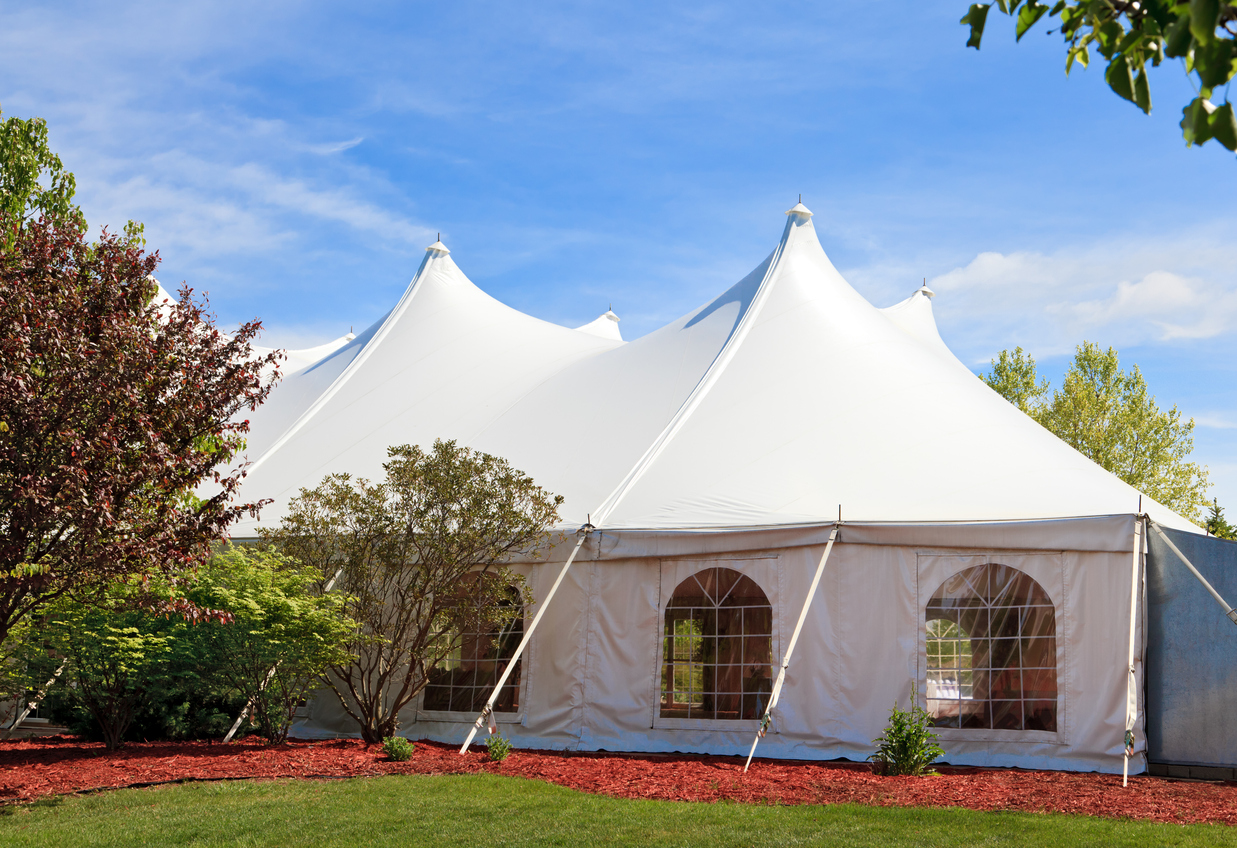
The most common question we receive from event planners is whether their backyard or corporate tent actually requires a formal permit. In 2026, the answer across most of Long Island is determined by the “400 Square Foot Rule.” This threshold is the primary dividing line between a simple setup and a regulated structure that requires oversight from the local Fire Marshal or Building Department.
While individual villages like Garden City or the Town of Huntington may have slight variations, the general standards are as follows:
- The Size Threshold: Any tent larger than 400 square feet (for example, a 20′ x 30′ tent) or any canopy larger than 400 square feet typically requires a permit. It is important to note that a standard 20′ x 20′ tent is exactly 400 square feet, which often sits right on the edge of the permitting requirement, depending on the specific town’s interpretation.
- The “Contiguous” Rule: If you are planning to set up multiple smaller tents (such as three 10′ x 20′ tents) to avoid the 400 square foot rule, be aware that many Nassau and Suffolk municipalities consider tents placed within 10 to 12 feet of each other as a single “contiguous” structure. If the total aggregate area exceeds 400 square feet, a permit is still required.
- The 200 Square Foot Nuance: For tents with sidewalls or membrane structures, the permit threshold in some jurisdictions, including specific zones in Nassau County, drops to 200 square feet. This means even a relatively small enclosed tent could trigger a filing.
- Cooking Tents: In 2026, safety codes have become even stricter regarding food preparation. Any tent used for cooking with an open flame or heating element generally requires a permit regardless of its square footage.
Navigating these numbers can be exhausting for a homeowner or business owner. At Long Island Tent & Party Rental, we handle the calculations for you. We ensure that your layout is optimized for both space and compliance, and we manage the necessary filings so you don’t have to spend your planning hours at a municipal desk in Westbury or Riverhead.
Fire Safety and Certificates: What the Local Marshals Look For
In Nassau and Suffolk counties, a tent permit is only the first step. The real “teeth” of local regulations lie in the fire safety requirements. Local Fire Marshals in areas like Garden City and Huntington are diligent about inspections because temporary structures present unique risks. In 2026, the focus has intensified on three core areas: flame resistance, egress, and equipment placement.
1. The NFPA 701 Certificate
Every piece of fabric we install, from the tent canopy to the sidewalls and even the floor coverings, must be certified as flame-retardant.
- The Standard: Most Long Island municipalities require documentation that materials meet NFPA 701 standards.
- The Label: Modern fire codes require a permanently affixed label on the tent fabric itself. If a marshal visits your site and cannot find this label or a matching paper certificate, they have the authority to shut down the event immediately.
- Our Role: We maintain a digital and physical library of flammability certificates for every item in our inventory, ensuring that “satisfactory proof” is always ready for inspection.
2. Egress and Exit Signage
If your event expects more than 50 guests, the interior of your tent is treated similarly to a permanent building.
- Illuminated Exit Signs: For larger gatherings, the Fire Marshal requires exit signs to be internally or externally illuminated. In 2026, battery-backed LED signs are the standard to ensure visibility even during a power outage.
- Aisle Widths: We design your floor plan to include unobstructed aisles (typically 44 inches wide) and clearly marked exit points that contrast with the tent fabric.
3. The “20-Foot” Rule
Distance is a major factor in fire safety. In most Long Island jurisdictions, a tent must be separated from other structures, parked vehicles, and internal combustion engines (like generators) by at least 20 feet.
- Generators: These must be fenced off from the public and grounded properly.
- Cooking Operations: If your caterer uses an open flame, their tent must be at least 20 feet from the main assembly tent. In Nassau County, any tent used for cooking requires a permit, regardless of its size.
4. Safety Equipment
Finally, we ensure your site is equipped with the necessary hardware to pass a walk-through:
- Fire Extinguishers: We place 10lb ABC portable extinguishers so that no point in the tent is more than 75 feet away from one.
- No Smoking Signs: These are mandatory posts in all commercial tent installations across Long Island.
By choosing a high-compliance partner, you aren’t just renting a tent; you are hiring a team that understands the 2026 Fire Code of New York State. We handle the site plans, coordinate with the marshals, and provide the equipment that ensures your event is as safe as it is beautiful.
Beyond the Permit: Underground Utilities and Anchoring Safety
While the 400-square-foot rule and fire safety certificates are the primary concerns for municipal marshals, two other logistical factors can stall an event faster than any paperwork: underground utilities and anchoring regulations. In 2026, Long Island utility companies and local building departments have tightened their requirements for how and where tents are secured.
1. The “Call Before You Dig” Requirement (811)
Any time we drive a stake into the ground, even on private residential property in Nassau or Suffolk, New York State law requires a utility mark-out.
- The Risk: Puncturing a gas line, an underground electric cable, or a high-speed fiber-optic line is not only a safety hazard but also a massive financial liability for the property owner.
- The 2026 Timeline: In 2026, the 811 “Call Before You Dig” system requires at least two full working days (excluding weekends and holidays) to mark the area.
- Our Legwork: As part of our high-compliance service, we coordinate with the 811 system on your behalf. We ensure that your lawn is safely marked before our crew arrives, protecting your property and keeping your event on schedule.
2. Staking vs. Ballasting: The Surface Dilemma
Not every Long Island venue allows for staking. Whether you are setting up on an asphalt parking lot in Westbury or a delicate historic courtyard in Huntington, the method of securing the tent is strictly regulated.
- Staking: This is the safest and most common method. We use heavy-duty steel stakes driven up to 3 feet deep. However, this is only an option when underground utilities are cleared, and the surface allows penetration.
- Ballasting (Weights): If you cannot stake, you must use ballasts. In 2026, many municipalities have banned the use of “water barrels” because they do not provide enough resistance in high-wind conditions. Instead, we utilize G-Block concrete weights or specialized steel ballasting systems that meet New York State wind-load requirements.
- The Wind-Load Standard: For events in exposed coastal areas like the North Shore, we ensure our setups are rated for the 2026 wind standards (often up to 90–110 mph for temporary structures). This is a level of engineering that basic rental shops often overlook.
By handling both underground safety and structural anchoring, Long Island Tent & Party Rental ensures that your event isn’t just “legal” on paper, but also physically secure against the unpredictable weather of the Atlantic coast.
Why a “High-Compliance” Partner Matters
Navigating the logistical maze of Long Island’s municipal codes is not just a box-ticking exercise; it is the foundation of a safe and successful event. In 2026, the difference between a celebration that runs smoothly and one that is interrupted by a site visit from a Fire Marshal often comes down to the expertise of your rental partner. Choosing a “high-compliance” provider means you are investing in peace of mind.
At Long Island Tent & Party Rental, we handle the heavy lifting for you. If you are planning an upcoming event in Garden City, Huntington, or anywhere across Nassau and Suffolk, contact us today to speak with an event specialist and ensure your celebration is safe, spectacular, and in strict compliance with code.
Frequently Asked Questions
How far in advance should I start the permit process?
For most Long Island municipalities, we recommend starting the process at least 21 to 30 days before your event. This allows time for the 811 utility mark-out, site plan approvals, and any necessary revisions requested by the local Building Department or Fire Marshal.
What happens if it rains? Can I add sidewalls at the last minute?
While you can add sidewalls for weather protection, be aware that in some Nassau County jurisdictions, adding sidewalls to more than 25% of the tent perimeter may change the permit fee or even the structure’s classification. We always recommend deciding on sidewalls during the initial planning phase to ensure your permit is accurate.
Does a backyard wedding at my private home really need a fire extinguisher?
Yes. If your tent requires a permit (typically over 400 sq. ft.), the local Fire Marshal will require at least one 10lb ABC fire extinguisher. For larger tents or those with cooking stations, multiple extinguishers will be required at specific intervals.
Can I use my own generator to power the tent lighting?
You can, but it must meet specific safety codes. Generators must be located at least 20 feet from the tent, properly grounded, and fenced off from guest access. We provide “whisper-quiet” event-grade generators that are already compliant with these local ordinances.
If I rent two 200 sq. ft. tents and place them together, do I need a permit?
Usually, yes. Most Long Island towns consider tents placed within 10 to 12 feet of each other as “contiguous.” If the combined square footage exceeds 400 sq. ft., a permit is required as if it were one large structure.