A summer party on Long Island can be beautiful, but heat and humidity can quickly make an outdoor event uncomfortable. A tent provides valuable shade, yet shade alone may not be enough to keep guests cool during the hottest parts of the day.
The right tent size, layout, airflow plan, and cooling equipment can make a major difference. Small choices, such as leaving sides open or placing fans near seating areas, can help prevent heat from building up under the canopy.
In this guide, we will explain how to keep guests comfortable under a tent during a Long Island summer party and what to consider when planning your rental setup.
Why Summer Tent Events Can Become Uncomfortable
Long Island summers often combine high temperatures with heavy humidity. That moisture in the air can make guests feel warmer because sweat does not evaporate as quickly.
A party tent helps block direct sunlight, but it can still become hot when:
- The tent is too small for the guest count
- Tables and chairs are packed tightly together
- Sidewalls restrict airflow
- Cooking equipment adds heat
- The tent receives direct afternoon sun
- Fans or cooling equipment are not included
- Guests spend several hours under the tent
Body heat also adds up quickly during a crowded event. A space that feels comfortable while empty may feel much warmer once guests, food stations, music equipment, and lighting are added.
Choose the Right Tent Size for Your Guest Count
One of the most important ways to keep guests comfortable is to rent a tent with enough room for the full event layout.
Tent size should account for more than chairs and tables. You may also need space for:
- A dance floor
- Buffet or catering tables
- A bar
- A DJ or band
- Gift and dessert tables
- Lounge seating
- Serving staff
- Open walkways
- Cooling equipment
An undersized tent can feel crowded and restrict air movement. Guests may sit too close together, while food stations and decorations can create additional barriers to airflow.
A professional tent rental company can help estimate the space needed based on the type of seating, number of guests, and planned activities. Building in a little extra room can improve circulation and make the event feel more relaxed.
Select a Tent Style That Supports Airflow
Different tent styles offer different options for ventilation.
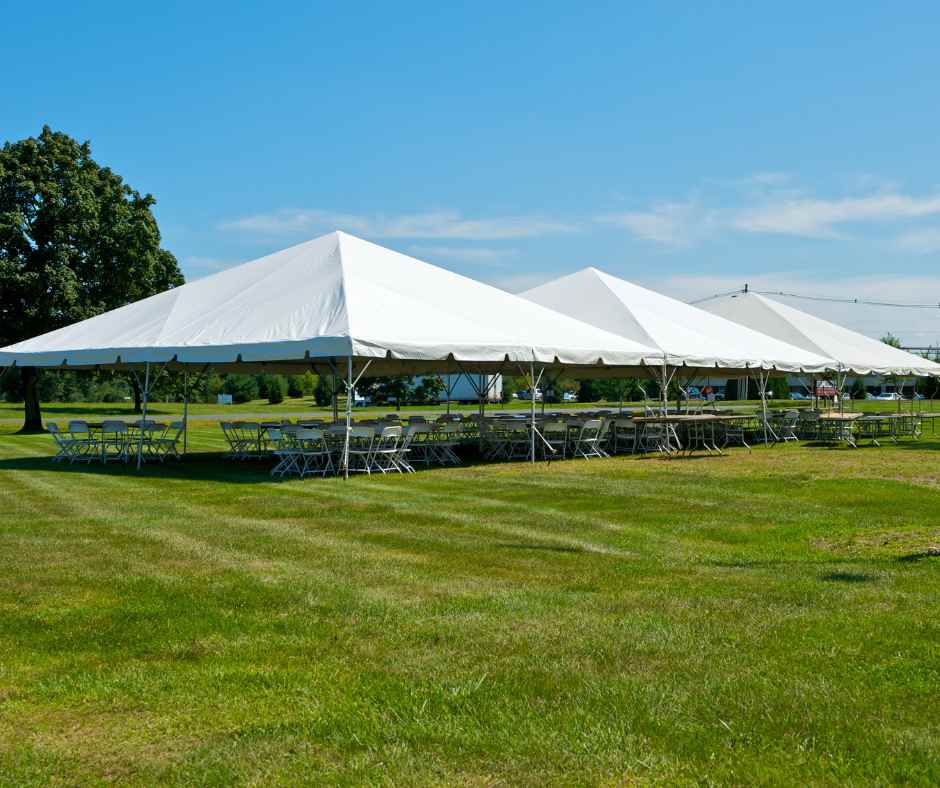
Open-sided tents usually provide the best natural airflow during warm weather. Air can move freely through the space, especially when the tent is placed in an open area with a breeze.
Frame tents can be useful for backyards and properties where center poles would interfere with the layout. Pole tents offer a classic appearance and can work well for larger lawns. Both can usually be configured with open sides, partial sidewalls, or full enclosure.
When planning a summer event, consider:
- Whether the tent needs sidewalls
- The expected wind direction
- Sun exposure throughout the day
- The property layout
- The need for fans or portable AC
- Whether nearby buildings block airflow
A fully enclosed tent may be necessary for climate control, but it should not be closed without an appropriate cooling and ventilation plan.
Position the Tent to Reduce Direct Sun Exposure
Tent placement can have a major impact on temperature.
If possible, place the tent where nearby trees, buildings, or other structures provide partial shade during the hottest hours. The position of the sun changes throughout the day, so a shaded location in the morning may receive direct sunlight by late afternoon.
A professional installer can also evaluate:
- Ground conditions
- Overhead obstructions
- Utility lines
- Slopes
- Drainage
- Access for setup
- Safe anchoring locations
The goal is to balance shade, airflow, safety, and convenient access for guests and vendors.
Use Tent Fans to Keep Air Moving
Fans are one of the most effective ways to improve comfort during an open-air summer party.
Commercial tent fans circulate air more efficiently than small household fans. They can help reduce stagnant heat and make the space feel cooler, even when they do not lower the actual air temperature.
For better results:
- Place fans near seating and gathering areas
- Direct airflow across the tent rather than at one table
- Avoid placing cords across walkways
- Keep fan openings clear of fabric and decor
- Use multiple fans for larger tents
- Confirm power access before the event
- Ask whether generators are needed
Position fans to support the natural flow of air through the tent. Poor placement can create hot spots while leaving other areas untouched.
Consider Portable Air Conditioning for Enclosed Tents
Portable air conditioning may be a good option for formal events, enclosed tents, or parties with guests who are sensitive to heat.
For portable AC to work effectively, the tent usually needs to be enclosed with sidewalls. Otherwise, cooled air can escape too quickly.
Several factors affect the amount of cooling required:
- Tent size
- Guest count
- Outdoor temperature
- Sun exposure
- Number of entrances
- Lighting
- Cooking equipment
- Electronic equipment
- Length of the event
Portable AC units also require proper power and safe placement. A rental company can help determine whether the tent can be cooled effectively and what equipment is needed.
Air conditioning is not always necessary for every summer party, but it can be valuable for weddings, milestone celebrations, corporate events, and events held during periods of extreme heat.
Add Sidewalls Strategically
Tent sidewalls can block sun, wind, and light rain, but they can also reduce ventilation.
For summer events, full enclosure may not always be the most comfortable choice unless air conditioning is being used. Partial sidewalls may provide a better balance.
Options can include:
- Solid walls on the side facing direct sunlight
- Open sides where the breeze enters
- Removable panels
- Clear walls for visibility
- Walls that can be added if weather changes
A flexible setup allows the event team to respond to changing conditions. Sidewalls can be opened during dry, calm weather and closed if rain or strong wind moves in.
Create Cooling Stations for Guests
Cooling stations give guests a place to take a break from dancing, socializing, or sitting in warm areas.
A cooling station can include:
- Bottled water
- Chilled towels
- Hand fans
- Sunscreen
- Shaded lounge seating
- Ice packs
- Misting fans where appropriate
- Light snacks with high water content
These stations are especially helpful for longer events. They also make it easier for guests to manage their own comfort without leaving the party.
Place water in more than one location so guests do not need to cross the entire tent to stay hydrated.
Plan Food and Beverage Service With the Heat in Mind
Food and beverage service can affect guest comfort as much as the tent itself.
Hydration should be easy and consistent. Offer water as soon as guests arrive and keep it available throughout the event.
Helpful planning steps include:
- Place beverage stations in shaded areas
- Keep water separate from the bar
- Avoid long buffet lines
- Use covered or chilled food displays
- Keep hot cooking equipment away from seating
- Schedule food service before peak heat when possible
- Provide nonalcoholic options throughout the event
Alcohol can contribute to dehydration, so water should remain highly visible and easy to access.
Food safety is also important during hot weather. Work with your caterer to make sure cold foods stay cold and hot foods remain at safe serving temperatures.
Adjust the Event Schedule Around Peak Heat
The hottest part of a summer day is often in the afternoon. Scheduling the main event later can reduce exposure to peak heat.
Consider:
- Starting ceremonies in the late afternoon
- Holding cocktail hour closer to sunset
- Scheduling dancing after temperatures begin to fall
- Keeping formal outdoor portions shorter
- Providing indoor access before the main event
- Planning setup early in the morning
Even a one-hour schedule adjustment can improve guest comfort.
For weddings or long celebrations, give guests time to cool down between the ceremony and reception when possible.
Choose Seating and Decor That Do Not Block Airflow
A beautiful layout should still allow air to move through the tent.
Dense seating arrangements, large floral installations, heavy draping, and tall walls of decor can restrict airflow. Wide aisles and open spaces can help prevent heat from becoming trapped.
When planning the layout:
- Leave space between tables
- Keep fan paths open
- Avoid blocking tent openings
- Limit heavy fabric near open sides
- Place tall decor away from major air paths
- Keep lounge areas from becoming overcrowded
Lightweight decor can often create the desired look without making the space feel enclosed.
Prepare for Guests Who Are More Sensitive to Heat
Some guests may be more affected by heat than others, including:
- Older adults
- Young children
- Pregnant guests
- People taking certain medications
- Guests with heart or respiratory conditions
- Anyone traveling from a cooler climate
Provide accessible seating near fans or cooling stations. Make sure water is easy to reach and identify an indoor or air-conditioned backup area when available.
It is also helpful to share the event setting with guests in advance. Let them know the party will be outdoors so they can dress appropriately and prepare for the weather.
Build a Weather Backup Plan
Long Island summer weather can change quickly. Heat, humidity, wind, and thunderstorms should all be part of the planning process.
A complete backup plan may include:
- Sidewalls ready for rain
- Flooring for damp ground
- Tent fans
- Portable AC
- Generators
- Extra lighting
- Covered catering areas
- Safe routes between the tent and buildings
- An indoor alternative for severe weather
Discuss these options before the event rather than waiting until the forecast changes. Adding equipment at the last minute may be difficult during busy summer weekends.
Work With a Professional Tent Rental Company
Keeping guests cool requires more than choosing a tent that looks good. The rental setup should account for guest count, property conditions, airflow, power, weather, and the event schedule.
An experienced rental company can help recommend:
- The correct tent size
- The best tent style
- Sidewall configurations
- Fan placement
- Portable cooling options
- Generators and power distribution
- Tables and seating layouts
- Weather backup equipment
Planning these details together can help create a more comfortable and organized event.
Keep Your Long Island Summer Party Comfortable
A tent can create an inviting outdoor event space, but guest comfort depends on the full setup. Proper sizing, open airflow, thoughtful placement, hydration, fans, and climate control can all help reduce the impact of summer heat and humidity.
Long Island Tent & Party Rental can help you choose the right tent, layout, sidewalls, fans, and party equipment for your property and guest count. To start planning a cooler, more comfortable outdoor celebration, contact us today.