
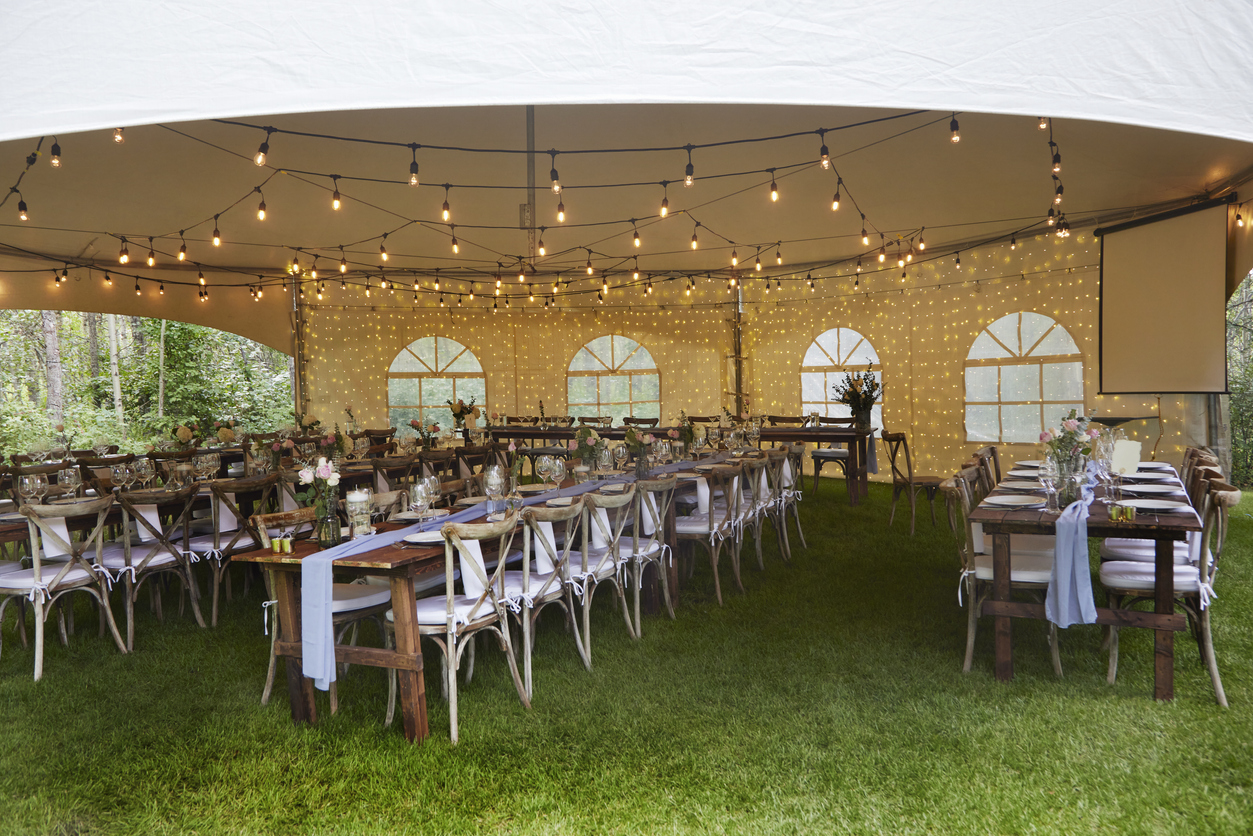
To plan a Suffolk County outdoor event with tent rentals, start by choosing your date, estimating your guest count, measuring the setup area, and reserving your tent early. Because Long Island weather can shift quickly, your plan should include rain coverage, sidewalls, flooring options, lighting, power access, and a clear installation timeline.
Outdoor events in Suffolk County can be beautiful. From backyard parties and waterfront weddings to graduations, fundraisers, corporate gatherings, and community celebrations, a tent can turn an open space into a comfortable event venue. But on Long Island, weather and timing matter just as much as guest count.
In this guide, we will walk through how to plan a Suffolk County outdoor event with tent rentals, what weather factors to consider, and when to reserve your tent, tables, chairs, lighting, and other rentals with Long Island Tent & Party Rental.
Why Tent Planning Matters for Suffolk County Events
Suffolk County outdoor events need more than a tent dropped onto a lawn. The right rental plan should account for the property, guest experience, weather, vendors, access, and setup schedule.
A well-planned tent rental can help with:
- Shade during sunny afternoon events
- Rain protection for guests and vendors
- More comfortable seating and dining areas
- Covered space for food, bars, and entertainment
- Defined event zones on a lawn or open property
- Lighting for evening events
- A polished look for weddings and formal gatherings
- Backup coverage when the weather changes
The goal is not just to cover guests. The goal is to create a functional outdoor space that works from setup through cleanup.
Start With the Event Date and Guest Count
The first step is to confirm the event date, approximate guest count, and type of event. These details guide almost every rental decision.
Before choosing a tent size, ask:
- How many guests are expected?
- Will all guests be seated at once?
- Is the event casual, formal, or mixed?
- Will food be served buffet-style or plated?
- Will there be a bar?
- Is there a dance floor?
- Will there be a DJ, band, or speaker area?
- Are vendors working under the tent?
- Does the event continue after sunset?
- Are children, older guests, or mobility needs part of the plan?
A cocktail-style gathering needs a different footprint than a seated wedding dinner. A graduation party may have guests coming and going, while a wedding reception usually needs seats for everyone at the same time.
Choose the Right Tent Size for Your Layout
Guest count is only the starting point. Tent size should also account for room for tables, chairs, food service, walkways, entertainment, and weather protection.
As a planning guide, consider:
- Standing cocktail event: less space per guest
- Seated rows for ceremony: moderate space per guest
- Rectangular banquet tables: efficient seating layout
- Round tables: more room for comfort and movement
- Buffet or bar setup: extra space for lines and service
- Dance floor: additional open floor area
- DJ or band: protected space for equipment
- Lounge furniture or displays: more layout flexibility
Common event zones to include under cover are:
- Guest seating
- Food service
- Bar area
- Gift or welcome table
- Dessert or cake table
- DJ or entertainment setup
- Dance floor
- Vendor tables
- Walkways
- Entry area
If the tent is sized only for tables and chairs, the event can feel crowded once guests start moving around. A little extra space can make the event feel smoother and more comfortable.
Plan for Suffolk County Weather
Long Island weather can change quickly, especially during spring, summer, and early fall. A warm, sunny forecast can still turn into wind, humidity, drizzle, or an afternoon storm.
Weather factors to plan for include:
- Rain
- Wind
- Heat
- Humidity
- Cool evenings
- Wet grass
- Muddy areas
- Direct sun
- Coastal breezes
- Bugs and mosquitoes
A tent gives your event a strong foundation, but the right accessories make a big difference. Depending on the season and location, you may want to discuss sidewalls, lighting, fans, heaters, flooring, or covered walkways.
When Sidewalls Make Sense
Sidewalls are useful when you need extra protection from wind and rain, privacy, or cooler evening temperatures. They can be added to some tent setups to help shield guests and equipment.
Sidewalls may be helpful for:
- Waterfront events
- Fall events
- Rainy forecasts
- Evening receptions
- Food service areas
- DJ or band equipment
- Formal events
- Properties with open exposure
However, sidewalls should be planned carefully. They can change airflow, affect guest comfort, and influence the layout. In summer, full sidewalls may trap heat if ventilation is not considered. For some events, partial sidewalls may be a better choice.
Think About Flooring and Ground Conditions
Suffolk County event sites vary. Some tents go on lawns, others on patios, driveways, farms, parks, or waterfront properties. The ground condition affects comfort, accessibility, and setup.
Flooring may be worth considering if:
- The event is formal
- The ground is uneven
- Rain is possible
- Guests will wear dress shoes or heels
- There will be a dance floor
- The site has sandy, soft, or damp soil
- Tables and chairs need better stability
- Accessibility is a concern
Even if you do not need full flooring, you may need a dance floor, walkway mats, or stable areas for food service and entertainment equipment.
Before installation, check the site for:
- Slope
- Low spots
- Irrigation lines
- Septic systems
- Underground utilities
- Tree roots
- Overhead branches
- Fences or gates
- Driveway access
- Parking limits
- Delivery truck access
A site that looks open may still have hidden obstacles. Sharing photos, measurements, and property details early helps us recommend a better setup.
Build a Rental Timeline
Timing is one of the most important parts of tent rental planning. Popular dates can book quickly, especially during wedding season, graduation season, holiday weekends, and peak summer weekends.
A helpful planning timeline looks like this:
- Several months before the event: Choose your date, estimate guest count, and reserve the main tent.
- Two to three months before: Finalize layout needs, seating style, tables, chairs, linens, and major rentals.
- One month before: Confirm food service, bar, entertainment, lighting, and power needs.
- Two weeks before: Review guest count, delivery access, setup area, and weather concerns.
- Final week: Confirm final rental details, site readiness, and any weather-related adjustments.
For large events, weddings, and peak season dates, earlier is better. Waiting too long can limit tent sizes, rental options, delivery windows, and layout flexibility.
Prepare the Site Before Installation
A smooth installation starts with a prepared site. Before the tent arrives, the setup area should be clear, accessible, and ready for safe installation.
Before delivery, make sure to:
- Move furniture, toys, grills, and yard items
- Clear vehicles from access paths
- Mark sprinkler heads
- Identify underground utilities if needed
- Locate septic areas and avoid setting up over sensitive components
- Trim low branches if necessary
- Clean up pet waste
- Unlock gates
- Confirm parking or delivery access
- Make sure the setup area is available at the scheduled time
If the tent will be installed on grass, avoid watering the area right before setup. Wet or soft ground can make installation more difficult.
Do Not Forget Lighting and Power
Outdoor events often need more power than people expect. Lighting, music, catering equipment, fans, heaters, photo booths, and bar service may all require electricity.
Plan power needs for:
- Tent lighting
- DJ or band equipment
- Catering equipment
- Bar service
- Coffee or beverage stations
- Fans or heaters
- Restroom trailers
- Photo booths
- Charging stations
- Pathway lighting
Even daytime events can benefit from lighting if cleanup happens after sunset or if cloudy weather makes the tent darker. A professional rental plan should account for where cords go, how power will be supplied, and how to keep walkways safe.
Coordinate With Vendors Early
If you are working with caterers, florists, DJs, planners, photographers, or venue managers, you should share tent details early. Vendors need to know where they can set up, when they can arrive, and how the space will function.
Helpful vendor questions include:
- How much space does catering need?
- Does the DJ or band need a stage?
- Where should the bar go?
- Do vendors need covered prep space?
- Are there power requirements?
- Will deliveries overlap?
- Where should trash and service areas be located?
- Does the photographer need open sightlines?
- Is there a rain plan for the ceremony?
The best event layouts support both guest comfort and vendor workflow.
Common Tent Rental Mistakes to Avoid
Outdoor event issues usually come from waiting too long or underestimating space and weather needs.
Avoid these mistakes:
- Booking too late for a peak-season date
- Choosing a tent based only on guest count
- Forgetting buffet, bar, and dance floor space
- Ignoring rain and wind protection
- Skipping lighting for evening events
- Not measuring the setup area
- Forgetting about delivery access
- Setting up too close to trees or obstacles
- Assuming every surface works for every tent
- Waiting until the forecast changes to ask about sidewalls
- Not coordinating with caterers or entertainment
A better plan is to build the tent layout around the full event experience, not just the seating chart.
What Long Island Tent & Party Rental Can Help With
Long Island Tent & Party Rental can help turn your outdoor space into a complete event setup. Whether you are planning a backyard birthday, wedding reception, graduation party, corporate event, or community gathering, we can help you choose the right rentals for your guest count, layout, and weather plan.
We can help with:
- Tent sizing
- Tent installation
- Tables and chairs
- Linens
- Lighting
- Dance floors
- Sidewalls
- Event layout planning
- Delivery coordination
- Weather planning
- Rental timing recommendations
Our team can help you think through the details that are easy to miss, including space, access, ground conditions, lighting, and event flow.
Call Long Island Tent & Party Rental for Suffolk County Event Planning
Call Long Island Tent & Party Rental as soon as you have an event date, a general guest count, and an outdoor location. Early planning gives you more tent options, better rental availability, and more time to prepare for Suffolk County weather.
A successful outdoor event depends on the right tent size, smart timing, weather protection, vendor coordination, and a prepared setup area. For Suffolk County weddings, parties, graduations, fundraisers, corporate events, and backyard celebrations, contact Long Island Tent & Party Rental today. Our team can help you plan a comfortable, polished event rental setup from start to finish.